
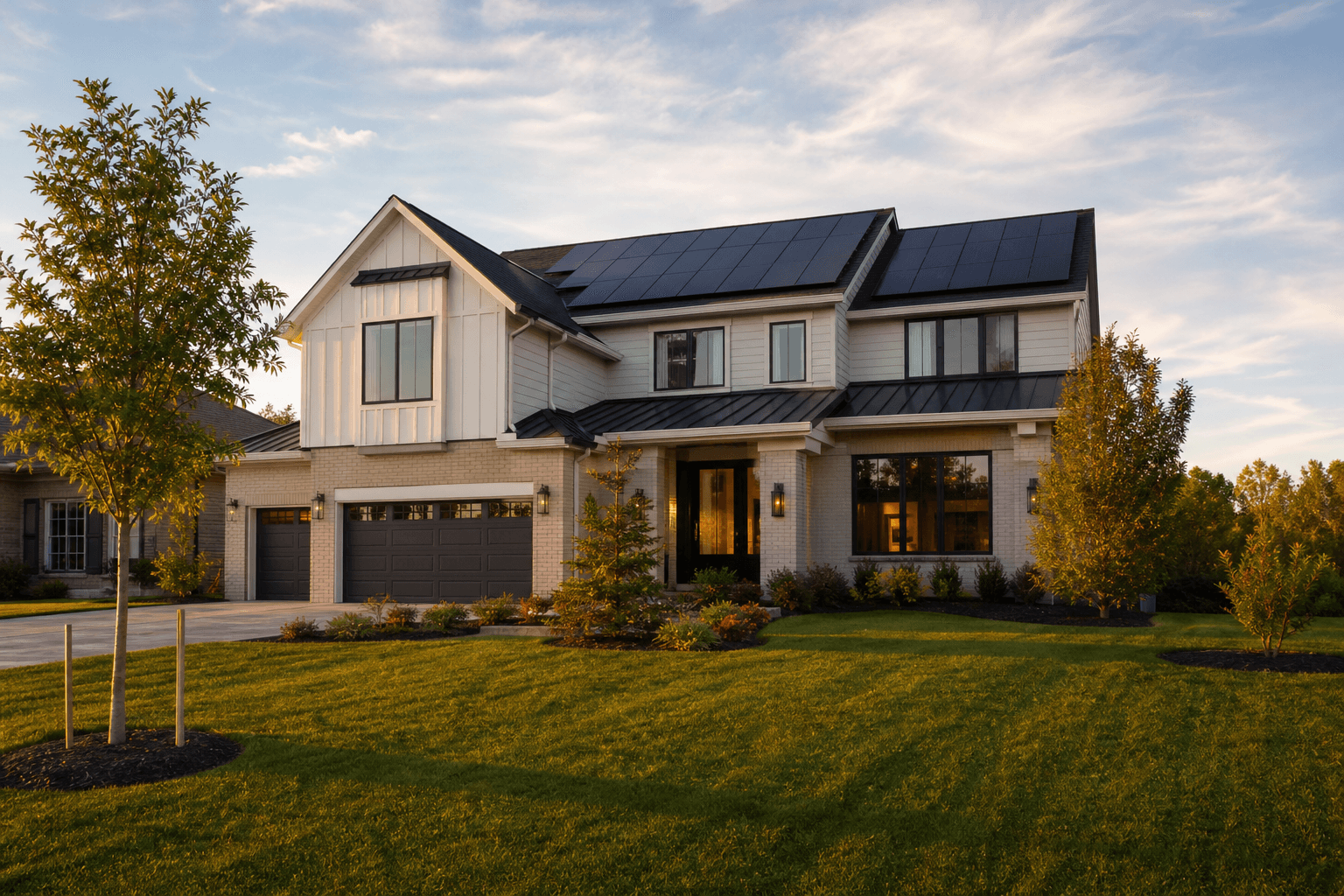
As of May 2026, the answer is not the same answer homeowners heard in 2024 or 2025.
Solar can still be worth it in 2026. It is not automatically worth it. The math is tighter because the federal Section 25D residential clean energy credit ended on December 31, 2025 under the One Big Beautiful Bill Act. If you buy rooftop solar in 2026 with cash or a loan, the federal tax credit for the homeowner is zero.
That one fact changes the sales pitch. A system that penciled out at 7 years in 2025 may pencil out at 10 or 12 years in 2026. A marginal roof may no longer work. A battery in California may make sense. A battery in a state with full retail net metering may still be mostly a backup-power purchase, not a payback machine.
The honest answer is this:
- Solar is usually still worth checking if you have high electric rates, a sunny roof, a long-term home, and decent state or utility incentives.
- Solar is often worth it through a lease or power purchase agreement if the contract is clean and the rate is clearly below your utility rate, because the third-party owner can still use the commercial federal credit.
- Solar may not be worth it if your roof is shaded, your utility export rate is weak, your usage is low, your roof needs replacement, or the quote is inflated to hide a loan dealer fee.
Before you sign anything, run the numbers with your real utility bill and get at least three bids. If you want help reading them, compare real quotes before a salesperson turns a 20-minute visit into a 25-year obligation.
The short answer
For most good solar homes in 2026, solar is still a good energy hedge. It is less generous than it was when the 30% residential federal credit existed.
A fair 2026 residential solar quote often lands around $2.50 to $3.50 per watt before state incentives, depending on state, equipment, roof difficulty, installer quality, and financing. A 7 kW system at $3.00 per watt costs $21,000 before state incentives. In 2025, that system might have had a $6,300 federal credit. In 2026, an owned system gets none.
That does not mean the savings went to zero. Solar still offsets electricity that is expensive and getting more expensive in many markets. The U.S. Energy Information Administration shows residential electricity rates have risen materially since 2020, and state averages vary widely. You can check current retail rate data in the EIA Electric Power Monthly.
The core question is simple: will the system produce enough valuable electricity over 25 to 30 years to beat its installed cost, financing cost, maintenance cost, and opportunity cost?
A rough 2026 rule:
| Situation | Solar outlook in 2026 |
|---|---|
| High electric rate, good roof, strong state incentive | Usually worth it |
| High electric rate, good roof, no state incentive | Often worth it, but payback is longer |
| Low electric rate, full retail net metering | Maybe, if installed cost is low |
| Low electric rate, weak export rate | Often weak |
| California NEM 3.0 without battery | Often weak |
| California NEM 3.0 with right-sized battery | Often stronger |
| Lease or PPA with clear savings and no escalator trap | Can be worth it |
| Shaded roof or roof replacement needed soon | Usually wait or fix roof first |
The best projects still have 8 to 12 year simple paybacks. Some strong incentive markets can beat that. Weak projects may stretch past 15 years, which is too long for many homeowners.
What changed in 2026
The biggest change is federal tax treatment.
For homeowner-owned residential systems, Section 25D is dead. If you buy panels in 2026 with cash or a loan, there is no federal residential solar tax credit to claim. Check the IRS residential clean energy credit page when filing, but do not build a 2026 owned-system proposal around a 30% federal credit. It is gone.
Third-party-owned solar is different. Leases and PPAs are not claimed by the homeowner as a residential credit. The system owner is usually a solar finance company, installer affiliate, or fund. Those systems can still use the commercial Section 48E clean electricity investment credit, currently scheduled through 2027 for qualifying projects that began construction by the end of 2026. The IRS maintains guidance for the Clean Electricity Investment Credit.
That means 2026 has two solar markets:
- Owned residential solar: no federal credit for the homeowner.
- Third-party-owned solar: federal commercial tax credit can still reduce the provider's cost, and some of that benefit may show up as a lower lease or PPA rate.
Do not assume the provider passes all of it through. Read the price per kWh, escalator, buyout terms, transfer terms, and end-of-term terms.
State and utility incentives now matter much more. Examples include:
- State tax credits in places such as New York, Massachusetts, South Carolina, and North Carolina.
- Rebate or block-grant programs such as NY-Sun, Illinois Shines, Maryland residential solar rebates, and California SGIP battery incentives.
- Property tax and sales tax exemptions.
- SREC or REC markets in PJM and other renewable portfolio standard states.
- Utility-specific rebates and net metering structures.
Use DSIRE to verify current state and utility incentives. Program rules change. Funding blocks close. Income rules and equipment rules matter.
What solar costs now with no federal credit
In 2026, homeowners should look at gross cost first, not cost after a missing credit.
Residential solar costs vary by market, but a normal cash price for a straightforward rooftop system is often in this range:
| System size | $2.50/W | $3.00/W | $3.50/W |
|---|---|---|---|
| 5 kW | $12,500 | $15,000 | $17,500 |
| 7 kW | $17,500 | $21,000 | $24,500 |
| 10 kW | $25,000 | $30,000 | $35,000 |
| 12 kW | $30,000 | $36,000 | $42,000 |
NREL's residential PV cost benchmarks show that soft costs, customer acquisition, permitting, labor, overhead, and margin remain a large share of U.S. rooftop solar pricing. The NREL Annual Technology Baseline is useful for understanding cost categories and long-run assumptions.
Batteries are separate. A single home battery often adds $10,000 to $18,000 installed before rebates, depending on capacity, backup panel work, brand, and electrical upgrades. Two batteries can push the add-on cost above $25,000.
Main panel upgrades can add $2,000 to $5,000. Roof work can add much more. Trenching, tile roofs, steep roofs, long conduit runs, and service upgrades can change the price.
Financing can change the price even more. Many solar loans include dealer fees. A dealer fee is an upfront cost paid to a lender so the homeowner sees a lower stated interest rate. It can add 10% to 35% to the contract price. A $24,000 cash system can become a $31,000 financed system before interest. If a quote only shows a monthly payment, ask for:
- Cash price.
- Financed price.
- APR.
- Dealer fee or lender fee.
- Loan term.
- Total payments over the full term.
- Prepayment rules.
A low monthly payment can still be a bad deal. A 25-year loan can outlive the inverter warranty, your roof plan, and your time in the house.
The 2026 solar payback formula
Simple payback is not perfect, but it is a useful first filter.
The basic formula is:
Net installed cost divided by first-year electric bill savings equals simple payback.
Example A: strong owned-system case
- 8 kW system.
- $3.00/W cash price.
- Gross cost: $24,000.
- State incentive: $4,000.
- Net cost: $20,000.
- Year-one production: 10,800 kWh.
- Value of solar electricity: $0.22/kWh blended value.
- Year-one savings: $2,376.
- Simple payback: 8.4 years.
That is a solid 2026 project. After payback, the system still has many years of production left.
Example B: no federal credit, weak export rate
- 8 kW system.
- $3.25/W cash price.
- Gross cost: $26,000.
- State incentive: $0.
- Year-one production: 10,000 kWh.
- Blended solar value: $0.12/kWh because exports are paid below retail.
- Year-one savings: $1,200.
- Simple payback: 21.7 years.
That is usually not compelling unless the homeowner values emissions reduction, backup readiness, or long-term rate protection more than financial return.
Example C: third-party-owned PPA
- Current utility rate: $0.24/kWh.
- PPA rate: $0.16/kWh.
- Annual solar production consumed or credited: 10,000 kWh.
- Year-one savings: about $800.
- Escalator: 0% to 2.9% matters a lot.
A PPA can work if the starting rate is well below the utility rate, the escalator is low or zero, and the transfer terms are clean. It can fail if the rate escalates faster than utility rates or if the system makes home sale harder.
For production estimates, use NREL PVWatts. It is not perfect, but it is transparent and widely used. Compare installer production estimates against PVWatts. If an installer promises 15% more production than PVWatts without a clear reason, be skeptical.
A good payback model should include:
- Installed cost.
- State incentives.
- REC or SREC income.
- Expected production by month.
- Retail rate offset.
- Export credit rate.
- Utility fixed charges that solar cannot erase.
- Panel degradation.
- Inverter replacement risk.
- Battery replacement risk if included.
- Financing cost.
- Expected years in the home.
Panel degradation is usually modest. Many modern panels warrant roughly 0.25% to 0.50% annual degradation after the first year. Inverters often have shorter warranty periods than panels. Microinverters may carry 25-year warranties. String inverters often run 10 to 12 years unless extended.
When solar is still worth it
Solar is still worth it in 2026 when the site and the rules are good.
Your electric rate is high
Solar saves more in places where grid electricity is expensive. A kWh offset at $0.30 is worth three times a kWh offset at $0.10. That is why states such as California, Massachusetts, New Jersey, New York, Connecticut, and Hawaii often remain strong solar markets even after federal residential incentives disappear.
If your utility bill has time-of-use rates, solar value depends on when your panels produce and when you use power. Afternoon and evening rates can matter more than annual average rates.
Your roof is sunny and simple
The best solar roofs face south, southwest, or west, with limited shade and enough space for a clean layout. East-facing panels can work. North-facing panels are usually weak unless the roof pitch is low and electric rates are high.
A simple asphalt shingle roof is usually cheaper than tile, slate, metal standing seam with special clamps, or a steep multi-plane roof. Fewer roof planes and fewer obstructions mean better production and lower labor cost.
You will stay in the home long enough
If simple payback is 9 years and you plan to move in 3, ownership may not be the best fit. Solar can add resale value, but buyers do not always pay dollar-for-dollar for the remaining savings. Appraisal treatment varies. Leases and PPAs can complicate sales if terms are not attractive.
If you may move soon, compare cash, short loan, lease, and PPA options carefully.
Your state incentive is real
With Section 25D gone, state programs can decide the deal. A $5,000 state tax credit or a strong REC program can replace a meaningful part of the lost federal value. A property tax exemption can also matter if solar would otherwise increase assessed value.
Your utility credits exports fairly
Retail net metering is still powerful. Under full retail net metering, excess daytime production offsets future usage at or near the retail rate. Many states still have some form of net metering, but export rates vary.
Avoid lazy assumptions. A utility may credit supply but not delivery. It may use avoided-cost rates. It may use time-varying export values. It may add non-bypassable charges. Your proposal should show the exact tariff.
You can use more solar power on site
Self-consumption matters more when export rates are low. Homes with daytime loads, pool pumps, EV charging, heat pumps, or smart load controls can use more solar directly. That increases the value of each kWh.
An EV can improve solar economics if you charge during sunny hours. A heat pump can improve winter electric usage, but solar output is usually lower in winter in northern states, so model by month.
When solar is not worth it
Some homes should not go solar in 2026. Saying no is better than signing a weak contract.
Your roof has too much shade
Shade from trees, chimneys, dormers, nearby buildings, and roof geometry can wreck production. Module-level electronics help with mismatch. They do not create sunlight.
Ask for a shade report. Look at monthly production, not just annual production. Winter shade can be severe when the sun is low.
Your roof needs replacement soon
Do not install a 30-year asset on a roof with 5 years left. Removing and reinstalling panels can cost thousands of dollars. If your roof is old, bundle roof replacement into the plan or wait.
Be careful with roof costs in solar loans. Roofing work generally has different tax treatment and financing risk than solar equipment. In 2026, there is no federal residential solar credit for owned systems anyway, so do not let anyone imply roof work becomes federally subsidized through solar.
Your utility rate is low
In some public power, co-op, hydro, and gas-heavy regions, electricity is cheap. Solar can still work if installation costs are low, but the payback may be slow.
A $0.11/kWh grid rate leaves little room for savings if your installed cost is $3.30/W and exports are discounted.
The quote is too expensive
A high electric rate cannot rescue a bloated price forever. In 2026, owned solar quotes above $4.00/W for a normal roof need a strong explanation. Specialty roofs, batteries, service upgrades, small systems, and difficult installs can justify higher numbers. A normal 9 kW asphalt-shingle job usually should not look like a luxury remodel.
The loan hides the true cost
Dealer-fee loans can make solar look cheap per month and expensive in total. Ask for the cash price and financed price. If the financed price is much higher, you are paying points upfront.
The contract shifts too much risk to you
Watch for production guarantees with weak remedies, vague battery backup promises, high escalators, arbitration clauses, roof warranty exclusions, and broad change-order language. A real proposal should name the equipment, layout, price, incentives, utility assumptions, and timeline.
Owned solar vs lease or PPA in 2026
The end of Section 25D makes the ownership decision more interesting.
In 2025, many homeowners preferred ownership because they could claim a 30% federal credit. In 2026, that direct federal benefit is gone. A third-party owner may still use Section 48E, so a lease or PPA may price better than it did relative to ownership.
That does not make leases and PPAs automatically better. It means they deserve a fair comparison.
| Option | Who owns system | Federal credit in 2026 | Best for | Main risk |
|---|---|---|---|---|
| Cash purchase | Homeowner | $0 | Highest long-term control | Higher upfront cost |
| Solar loan | Homeowner | $0 | Ownership with no cash upfront | Dealer fees and long terms |
| Lease | TPO provider | Provider may claim 48E | Simple fixed payment | Escalators and transfer terms |
| PPA | TPO provider | Provider may claim 48E | Pay per kWh produced | Long contract and rate escalation |
A lease is usually a fixed monthly payment. A PPA is usually a price per kWh produced. Both can include escalators, often 0% to 2.9% per year. A 2.9% escalator sounds small. Over 25 years, it can nearly double the payment.
Good TPO terms in 2026 often have:
- A starting rate clearly below your current utility rate.
- A 0% or low escalator.
- Clear production guarantee.
- Clear roof repair and removal terms.
- No surprise lien language beyond a standard UCC fixture filing.
- Transfer process that a buyer can understand.
- Buyout schedule that is not punitive.
- End-of-term removal or renewal terms in writing.
Owned solar still wins for many homeowners who can pay cash, use a low-cost credit union loan, or qualify for state incentives. TPO may win where the provider can use 48E and the homeowner cannot use enough state tax credits.
Compare both side by side. Do not compare a cash quote against a financed quote against a PPA without normalizing total 25-year cost and savings.
State-by-state incentives now matter more
The 2026 solar map is local. Two homes with the same roof and usage can have different outcomes because one is in a strong incentive state and one is not.
California is the clearest example. NEM 3.0, formally the Net Billing Tariff, sharply reduced the value of exports compared with old net metering. The California Public Utilities Commission explains the current customer generation rules on its net energy metering page. In many California cases, solar alone has a weaker payback than solar plus a battery that stores midday energy for evening use. SGIP battery incentives can help some households, especially eligible low-income, medical baseline, and high fire-risk customers. If you are in that market, read our California solar incentives page.
Illinois is a different case. Illinois Shines can provide meaningful REC value for qualifying residential systems, and net metering rules depend on utility and interconnection timing. REC payments can materially reduce net cost. The exact value depends on system size, block, utility group, and program status. Start with our Illinois solar incentives page, then verify current program details before signing.
New Jersey remains important because electricity rates are high and the Successor Solar Incentive program provides SREC-II certificates for eligible systems. Residential projects have had fixed SREC-II values under the Administratively Determined Incentive structure, though program rules and capacity blocks can change. See our New Jersey solar incentives page and confirm live details through DSIRE or state program materials.
Massachusetts has high electric rates, a state residential renewable energy income tax credit, property tax and sales tax treatment that can help, and the SMART incentive structure for eligible customers. Export compensation and utility specifics still matter. Our Massachusetts solar incentives page breaks down the local pieces.
Other examples matter too:
- New York has the NY-Sun incentive, a state solar tax credit, and net metering or value-stack rules depending on project type.
- Maryland has a residential clean energy rebate and an SREC market.
- South Carolina has a state solar tax credit that can be valuable for taxpayers with enough liability.
- North Carolina has state-level tax treatment and utility-specific programs that need close review.
- Texas has no statewide net metering mandate, but some retail electric providers and municipal utilities offer solar buyback plans.
- Florida has strong sun, sales and property tax exemptions, and utility net metering rules that have supported many projects.
The practical point: do not use a national payback average. Use your utility tariff, your roof, your state incentives, and your exact contract price.
Batteries and NEM 3.0
Batteries are not just a yes-or-no add-on. They solve specific problems. They also add a lot of cost.
A battery can help with:
- Backup power during outages.
- Using more solar at night.
- Avoiding high time-of-use rates.
- Reducing exports paid at low rates.
- Demand management in some utility territories.
A battery usually does not help much with:
- Homes in full retail net metering states with few outages.
- Low-rate utilities.
- Very small electric bills.
- Poorly sized solar systems.
California is the main 2026 battery case study. Under NEM 3.0, exported solar is often credited at avoided-cost values that can be far below retail rates during many hours. A battery can store midday solar and discharge during evening peak periods. That can improve payback.
But batteries still need hard math. A $14,000 battery that saves $500 per year has a 28-year simple payback before replacement risk. A $14,000 battery that saves $1,500 per year and qualifies for a strong rebate is a different story.
Ask for two proposals:
- Solar only.
- Solar plus battery.
Then compare incremental battery cost against incremental savings. Backup value is personal. Financial value is math.
Also ask what the battery backs up. Whole-home backup may require multiple batteries and load management. A single battery often backs up selected circuits: refrigerator, lights, internet, garage door, and some outlets. Central air conditioning, electric ovens, resistance heat, well pumps, and EV chargers can overwhelm small systems.
How to shop without getting burned
Solar is a construction project, a financial product, and a utility tariff decision. Treat it that way.
Use this checklist before signing:
- Get the cash price. Even if you plan to finance.
- Get the financed price. Compare it with cash.
- Confirm there is no 2026 federal residential credit for an owned system.
- Verify every state and utility incentive with DSIRE or the program website.
- Ask for the exact utility tariff and export rate used in the savings model.
- Compare annual production to NREL PVWatts.
- Ask for month-by-month production and savings.
- Check roof age and electrical panel limits.
- Read workmanship, roof penetration, inverter, panel, and battery warranties.
- Check installer licensing, insurance, and local references.
- Review cancellation rights and milestone payments.
- For leases and PPAs, read escalator, transfer, buyout, and removal terms.
Red flags:
- The salesperson says the federal 30% credit still applies to a 2026 owned system.
- The proposal hides the cash price.
- The production estimate is much higher than PVWatts with no reason.
- The savings model assumes electric rates rise 6% or more every year forever.
- The contract says incentives are not guaranteed but the sales pitch treats them as certain.
- The installer pressures you to sign before you can read the utility tariff.
- The battery is sold as whole-home backup without a load calculation.
- The loan term is 25 years and the total repayment is hard to find.
A reasonable electric rate escalation assumption is usually much lower than the worst sales decks show. Electricity prices can rise fast in some years and flatten in others. Model 2% to 4% and stress-test lower. If a deal only works with aggressive utility inflation, it is fragile.
The best solar proposals are boring. They show equipment, layout, cost, production, tariff, incentives, warranties, and timeline. They do not need magic.
If you are comparing bids now, use our solar calculator first, then get a free quote from vetted installers so you can see real pricing for your roof.
Verdict
Solar is still worth it in 2026 for many U.S. homeowners. It is not the easy 30%-off story it used to be.
The federal Section 25D residential credit is gone for owned systems. That raises paybacks and punishes overpriced quotes. The federal Section 48E commercial credit still supports third-party-owned systems, so leases and PPAs may be more competitive than many homeowners expect.
The best 2026 solar deals have four traits:
- High avoided electric cost.
- Clean roof and strong production.
- Real state, utility, REC, or battery incentives.
- Transparent pricing with no hidden financing markup.
The worst deals have the opposite: low rates, poor roof, weak export credits, high dealer fees, and a sales pitch built on a tax credit that no longer exists.
Do the math at the house level. Solar is not dead. The lazy solar pitch is.
Free quote
Want a real number for your home?
Honest Watts matches you with vetted local installers who compete on price. No pressure, no obligation.
Get my free quote